

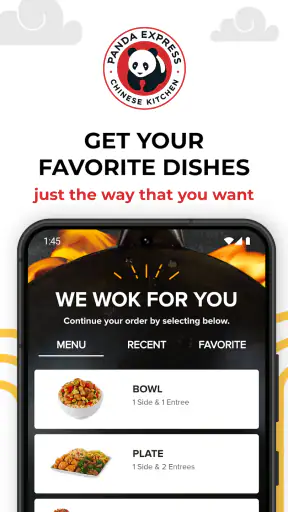
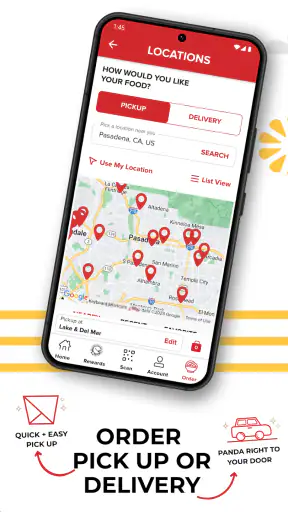
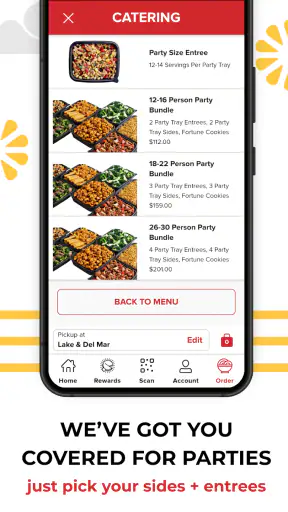
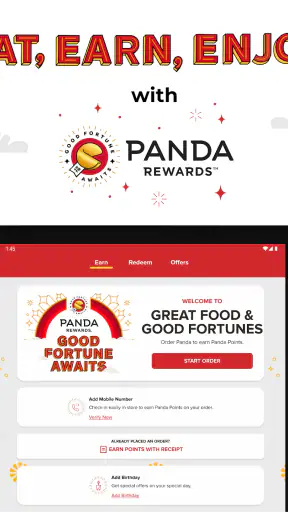
I found the Panda Express app most useful when I treated it as a practical ordering tool rather than as a replacement for the restaurant itself. It puts the chain’s menu, ordering flow, rewards, and account activity in one place, which is convenient when I already know I want Panda Express and would rather avoid waiting at the counter. The experience is straightforward, but the real question is whether that convenience matters enough for your usual meals.
This is a free Food & Drink app from Panda Restaurant Group, Inc., aimed at everyone and available for Android devices running Android 7.0 or later. It has been around since August 20, 2014, and the current version is 7.6.3. With a 4.6 average from around 68 thousand ratings and more than 5 million installs, it is clearly a well-established option rather than a little-known restaurant utility.
What I looked for before recommending it
My first decision criterion was speed. A restaurant app should make a familiar order easier, not turn a simple meal into a long account-management exercise. I looked at how naturally the app supports a quick pickup, how much browsing it encourages, and whether the rewards element feels useful during ordinary visits instead of only during carefully planned orders.
The second criterion was control. Ordering from a phone is helpful when I want to review the meal before paying, adjust choices, or make sure I am selecting the right restaurant. It is less appealing when I am still undecided, ordering for several people, or trying to ask a staff member about something that needs a personal explanation. The app works best when the order is predictable and the restaurant choice is already clear.
I also considered the cost of changing habits. If I normally walk into a Panda Express location, switching to the app means creating or using an account, learning where the rewards information sits, and remembering to place the order before arriving. That is a small adjustment, but it matters if I only buy food occasionally. If I visit regularly, the repeated convenience becomes much easier to appreciate.
Finally, I compared it with the usual alternatives: ordering in person, using a general delivery service, or simply checking the menu without committing to an app-based order. Those options can be better in particular situations. The Panda Express app is strongest when I want a direct relationship with the restaurant and a fast route to a familiar meal.
The ordering flow is most valuable for repeat meals
When I already know what I want, the app removes several small points of friction. I can browse the available choices at my own pace, select a restaurant, and prepare the order before I reach the counter. That is especially useful during a short lunch break, when standing in line feels more costly than the food itself.
A realistic example is a weekday office lunch. I can open the app before leaving my desk, choose the nearby location, review the meal, and place the order while colleagues are still deciding where to eat. By the time I arrive, the useful part is already done. This is not a dramatic transformation, but repeated small savings are exactly where a restaurant app earns its place.
There is another benefit that is easy to overlook: the phone screen gives me a private moment to check the order. In a busy restaurant, I may feel rushed while choosing between combinations or deciding whether I want a side. With the app, I can pause, read the selections, and correct a mistake before completing the purchase. That makes it more comfortable for anyone who dislikes making decisions under pressure.
At the same time, the app should not be mistaken for a universal shortcut. It does not remove the need to choose the correct location or to pay attention to the details of the order. I still recommend checking the selected restaurant and reviewing the final basket, particularly when several locations are close together. A digital order can feel reassuring while still being wrong if I tap through too quickly.
Panda Rewards gives regular customers a reason to return
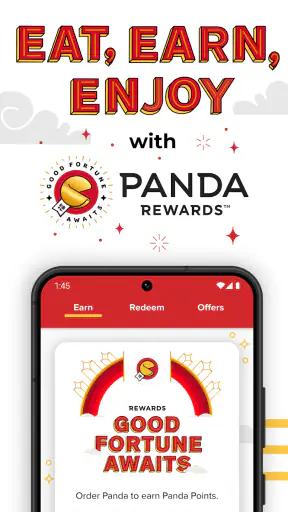
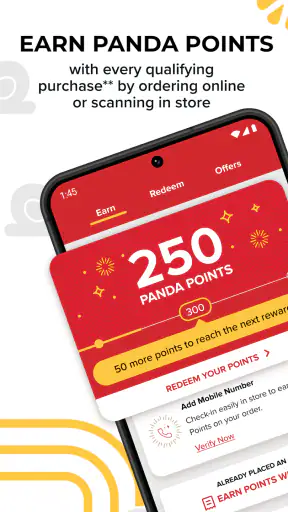
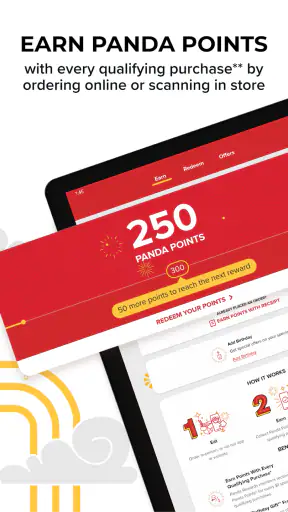
The rewards element is the main reason I would suggest installing the app instead of using it only once. Panda Rewards places the loyalty experience alongside ordering, so regular customers can keep their restaurant activity in the same account rather than relying on paper receipts or a separate card. For someone who visits often, that organization is more useful than the ordering screen alone.
I found the best way to use rewards is to make the app part of the normal routine. I would open it before ordering, confirm that the account is active, and then check the order summary before finishing. That small habit reduces the chance of treating the loyalty program as an afterthought. It also makes the app feel like a practical record of visits rather than a feature I remember only when a promotion catches my eye.
The trade-off is that rewards programs add another layer to a simple purchase. If I rarely eat at Panda Express, the account may not justify the extra step. I also prefer not to create accounts for every restaurant I visit. In that situation, ordering directly at the restaurant is simpler, even though I give up the convenience of having rewards and orders connected in one place.
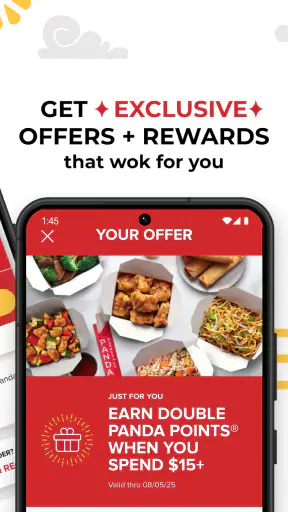
I would also avoid making a purchase solely because a rewards balance is available. The app can make returning feel more attractive, but the sensible decision still depends on whether I actually want the food. Loyalty tools are helpful when they support an existing habit; they are less helpful when they encourage unnecessary spending.
Browsing is useful, but the app is not a substitute for personal advice
The menu presentation helps when I need a refresher before ordering. I can look through the available food on my own screen and compare possible combinations without blocking the line. This is particularly convenient when ordering for another person who has a preference but does not know the menu well.
However, browsing on a phone does not provide the same conversational help as asking an employee. If I have a detailed question about ingredients, preparation, or a specific dietary concern, I would not rely on a quick visual scan. I would contact the restaurant or speak with staff directly. This is an important boundary: the app is good at presenting choices, not at replacing a human answer for a sensitive food decision.
That limitation also affects group orders. For a small, familiar order, I can manage the selections comfortably. For a large group with different preferences, I would slow down and confirm every item rather than assuming the digital flow will prevent all mistakes. The app can organize my choices, but it cannot resolve disagreements about what everyone wants.
Where it beats the usual alternatives
Compared with ordering at the counter, the app wins on preparation and privacy. I can make decisions before arriving, avoid repeating the order aloud, and review the basket at my own pace. It is also more convenient when I am already walking toward the restaurant and want the meal ready around my arrival.
Compared with a general delivery service, the restaurant’s own app feels more focused. I am not browsing unrelated restaurants or navigating a broad marketplace. I go directly to Panda Express, which makes sense when I have already chosen the chain. The loyalty experience is also naturally tied to Panda Rewards rather than being mixed into a separate delivery account.
That directness is also the app’s biggest strength. It does not try to be a universal food platform. If my decision is “I want Panda Express,” the dedicated app is more relevant than opening a large delivery marketplace and searching through options I have already rejected.
There are situations where a general delivery service may fit better. If I am comparing several restaurants, ordering for people with different tastes, or trying to arrange food from multiple places, a broader platform may be more convenient. The same is true when delivery is the priority and I do not want to manage separate restaurant apps. I would choose the Panda Express app for a direct restaurant order, not for broad discovery.
Small habits that make the app easier to use
My first practical tip is to choose the restaurant before spending too much time building the order. Location affects the usefulness of the whole process, and selecting it early helps prevent the frustrating situation of preparing a basket only to discover that the wrong branch is active.
My second tip is to use the app for meals I already understand before experimenting with unfamiliar choices. That lets me learn the ordering rhythm without making a complicated decision under time pressure. Once the routine feels natural, browsing becomes more enjoyable instead of slowing me down.
My third tip is to treat the final review as a separate step. I check the restaurant, the selected meal, the number of items, and the account before confirming. This is especially valuable when ordering for more than one person, because a small tap error can be harder to notice when the basket grows.
A fourth useful habit is to open the app before reaching the restaurant rather than while standing in front of the counter. The main benefit comes from moving the decision earlier. If I wait until I am already in a crowded location, I lose much of the convenience that made the app attractive in the first place.
I also recommend keeping expectations realistic about rewards. The program can make repeat visits more organized, but it should not be the only reason to choose the app. I see it as an added benefit attached to ordering, not as a complicated game that needs constant attention.
Where another option may be the better choice
I would skip the app if I am making a one-time visit and want the fastest possible decision with no account or digital routine. Walking to the counter may be simpler. The same applies if I am already inside and there is no meaningful line; opening the app, checking the location, and completing an order can take longer than speaking to an employee.
I would also choose a different option when I need detailed personal guidance. Food allergies, ingredient questions, and unusual requests deserve careful communication. A restaurant app can display selections, but I would rather ask a qualified member of staff than infer an answer from the ordering interface.
For delivery comparisons, the dedicated app may not be my first choice. A broader service is better when I am deciding between many restaurants or coordinating a mixed order. The Panda Express app is deliberately narrow, and that is either an advantage or a limitation depending on the decision I am trying to make.
Another consideration is device compatibility. The app requires Android 7.0 or later, so anyone using an older Android phone should check the operating system before planning around it. For supported devices, the current 7.6.3 release provides the version I would expect users to install, while the age rating of Everyone makes it suitable for a broad audience.
The real cost of switching from the counter
The app is free, so the main cost of switching is not an upfront purchase. It is the time needed to establish a routine. I have to install it, sign in or create an account, select a restaurant, and become familiar with the rewards area. For a regular customer, that effort is small and quickly repeated benefits can make it worthwhile.
For an occasional customer, the calculation is different. If I visit only when someone else suggests Panda Express, I may not gain much from maintaining another restaurant account. In that case, the counter remains a perfectly reasonable alternative. The app does not need to be installed simply because it exists.
There is also a mental cost to digital ordering: the responsibility shifts slightly toward me. I need to read the selections, verify the location, and notice any mistake before confirming. In-person ordering gives me an immediate chance to clarify something, while an app rewards careful review. That is not a flaw unique to this product, but it is an important part of deciding whether the convenience suits me.
For me, the switch becomes worthwhile when three conditions meet: I already know I want Panda Express, I am likely to order again, and I value preparing the meal before arrival. If only one of those is true, the benefit is less convincing.
My recommendation for different kinds of customers
I recommend Panda Express to regular customers who want a direct ordering route and a convenient way to use Panda Rewards. It is also a good fit for people who dislike making menu decisions in a queue, commuters who can order before arriving, and households that repeatedly choose the same restaurant.
I am more cautious about recommending it to occasional visitors, people who prefer not to create restaurant accounts, and anyone who needs detailed food guidance before ordering. Those users may be happier speaking with staff or using a broader service that better matches their immediate goal.
The app’s strong rating and large user base suggest that its basic approach works for many people, but popularity does not remove the need to choose according to personal habits. I would not install it for the sake of having another food app. I would install it because Panda Express is already part of my routine and I want the ordering and rewards experience in one place.
Overall, I see it as a focused, sensible companion to Panda Express rather than an essential app for everyone. It wins through directness, repeat-order convenience, and Panda Rewards. It loses some ground when I need broad restaurant comparison, personal dietary advice, or a completely account-free experience. If Panda Express is a regular meal for you, the free app is worth trying; if it is an occasional choice, ordering in person may remain the simpler answer.
After using it, my final judgment is positive but practical. Panda Express does not need to do everything to be useful. It only needs to make a familiar restaurant order easier, and for the right customer, it does that well. The best reason to keep it installed is not novelty; it is the quiet convenience of having the next order, the selected location, and the rewards experience ready when I actually want them.


